
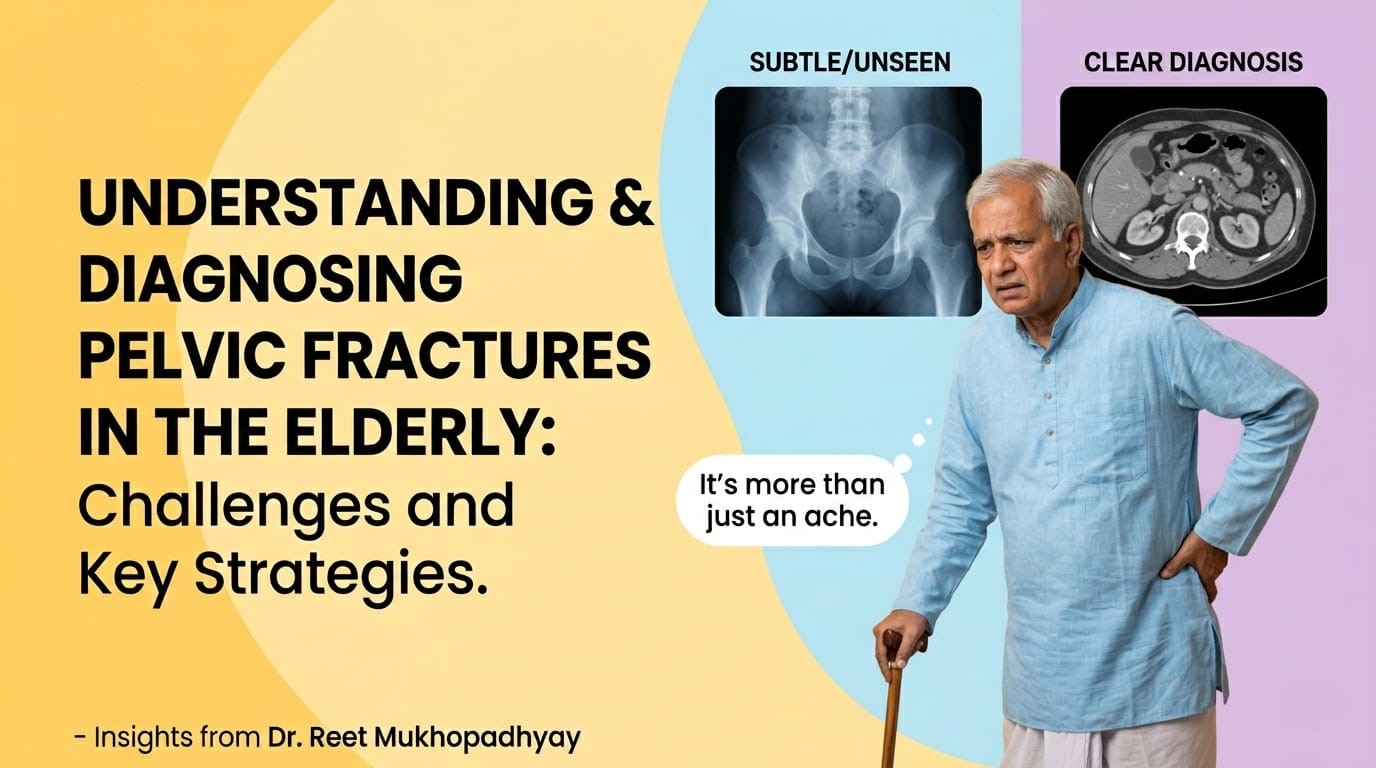
Pelvic Fractures in elderly patients are more common than many people realize, yet they are frequently misdiagnosed or overlooked. Unlike high-impact injuries seen in younger individuals, these fractures often result from minor falls or even routine movements. Due to subtle symptoms and underlying health conditions, it may go undetected in the early stages, leading to delayed treatment and complications.
What Are Pelvic Fractures?
It occur when one or more bones in the pelvic region break. In elderly individuals, these fractures are usually caused by low-energy trauma such as a simple fall, largely due to weakened bones from osteoporosis. (Dr. Reet Mukhopadhyay -Best Pelvic Fracture Doctors in Kolkata)
Why Pelvic Fractures Are Often Misdiagnosed in Elderly Patients
-
Subtle Symptoms of Pelvic Fractures
Unlike severe trauma cases, elderly patients may experience mild pain and still be able to walk. This often leads to the assumption of muscle strain rather than Pelvic Fractures, delaying diagnosis.
-
Osteoporosis Masks Injury Severity
Osteoporosis weakens bones significantly, making fractures possible even without major trauma. Around 94% of pelvic fractures in older adults are linked to osteoporosis, which complicates clinical assessment.
-
Inadequate Imaging in Early Stages
Standard X-rays may fail to detect certain types of it, especially insufficiency fractures. Advanced imaging like CT scans or MRI is often required for accurate diagnosis.
-
Overlapping Symptoms with Other Conditions
Pain from pelvic fractures can mimic arthritis, hip injuries, or lower back issues, leading to misinterpretation and delayed treatment.
-
Low Awareness of Fragility Fractures
Low-energy fractures in elderly patients are often underestimated by both patients and caregivers, resulting in delayed medical attention.
Risks of Delayed Diagnosis
Misdiagnosed, it can lead to serious complications such as reduced mobility, blood clots, and prolonged recovery. Early detection is crucial to prevent long-term disability and improve outcomes. (Dr. Reet Mukhopadhyay -best pelvic fracture surgery in Kolkata)
How to Improve Diagnosis of Pelvic Fractures
- Use advanced imaging techniques like CT or MRI
- Pay attention to persistent pelvic or hip pain after a fall
- Evaluate elderly patients thoroughly, even after minor injuries
- Increase awareness about fragility fractures
Conclusion
Pelvic Fractures in elderly patients are often misdiagnosed due to subtle symptoms, weak bones, and limitations of initial diagnostic methods. Recognizing early warning signs and using appropriate imaging can significantly improve outcomes. Timely diagnosis not only reduces complications but also ensures faster recovery and better quality of life.
