
Knee replacement surgery has transformed the lives of millions of patients suffering from severe knee pain, arthritis, and limited mobility.
The procedure replaces damaged joint surfaces with artificial implants that restore movement and significantly reduce pain.
For most patients, knee replacement surgery in Kolkata offers long-lasting relief and improved quality of life.
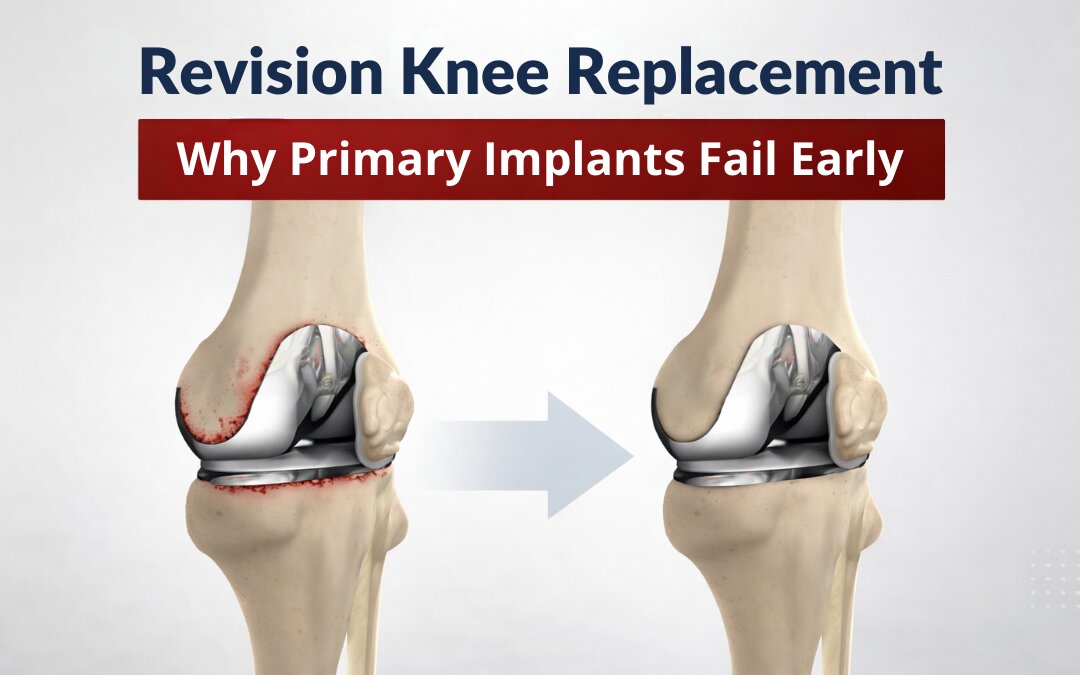
However, in some cases, complications can arise after surgery. A small percentage of patients may experience early failure of knee replacement implant, which can cause pain, instability, and difficulty walking.
When this happens, doctors may recommend Revision Knee Replacement Surgery to replace the failed implant and restore proper knee function.
Understanding why knee replacement implants fail, recognizing the symptoms of failed knee replacement, and seeking timely treatment are essential steps toward successful recovery.
Under the care of an experienced knee replacement surgeon in Kolkata, such as Dr. Reet Mukhopadhyay, patients can receive expert evaluation and advanced treatment options for failed knee replacement treatment.
What is Revision Knee Replacement Surgery?
Revision Knee Replacement Surgery is a specialized orthopaedic procedure performed when a previously implanted artificial knee joint no longer functions properly.
During this surgery, the damaged or worn-out implant is partially or completely removed and replaced with a new prosthetic joint.
This procedure is often necessary when complications arise after primary knee replacement surgery. The goal of Revision Total Knee Replacement is to restore stability, reduce pain, and improve knee movement.
Key Aspects of Revision Knee Replacement Surgery
The procedure typically involves several important steps:
- Removal of the failed or damaged knee implant
- Repairing damaged bone or surrounding tissues
- Replacing the implant with a new artificial joint
- Restoring proper alignment and stability of the knee
Compared to primary knee replacement, knee revision surgery is technically more complex and requires advanced surgical expertise.
Why Revision Surgery is More Complex
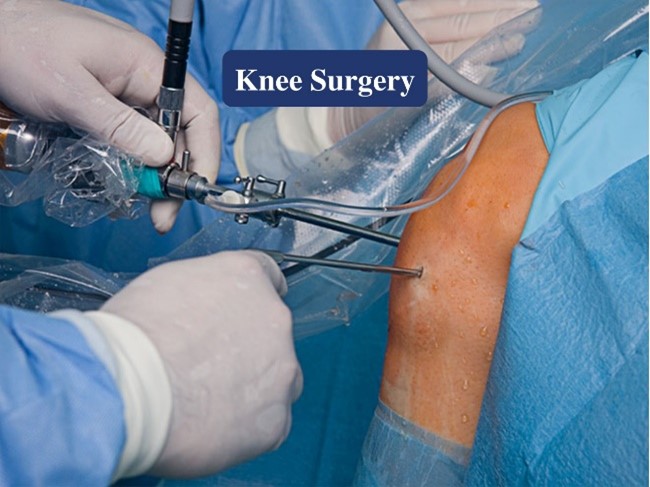
Revision procedures are more challenging for several reasons:
- There may be bone loss around the implant
- Scar tissue from the previous surgery can affect joint movement
- The surgeon may need specialized implants designed for revision procedures
- Additional reconstruction of bone or ligaments may be required
Because of these factors, patients should consult a highly experienced knee replacement surgeon in Kolkata when considering revision surgery.
Why Knee Replacement Implants Fail
Although knee replacement surgery is generally successful, several factors can contribute to early failure of knee replacement implant.
Understanding why knee replacement implants fail can help patients recognize problems early and seek proper treatment.
Implant Loosening
Implant loosening is one of the most common causes of knee replacement failure.
This occurs when the artificial implant gradually separates from the surrounding bone.
Causes of Implant Loosening
- Weakening of the bone around the implant
- Poor fixation of the implant during surgery
- Excessive physical stress on the knee joint
- Natural wear over time
When loosening occurs, patients may require knee implant failure treatment, which often involves Revision Knee Replacement Surgery.
Infection After Knee Replacement
Infection is another serious cause of implant failure.
Bacteria may enter the joint during or after surgery, leading to inflammation and damage around the implant.
Symptoms of Infection
- Persistent swelling around the knee
- Redness or warmth near the surgical site
- Fever or chills
- Drainage from the incision
- Severe knee pain
If an infection damages the implant or surrounding tissues, doctors may recommend Revision Total Knee Replacement as part of failed knee replacement treatment.
Implant Wear and Tear
Over time, artificial knee components may wear down due to repeated movement and friction. This can lead to instability or mechanical failure of the implant.
Factors Contributing to Implant Wear
- High-impact physical activities
- Excess body weight
- Improper implant positioning
- Low-quality implant materials
Severe wear can eventually lead to implant damage, requiring knee revision surgery.
Instability of the Knee Joint
In some cases, the knee joint becomes unstable after surgery. Instability may occur when the ligaments around the knee fail to support the artificial joint properly.
Reasons for Knee Instability
- Damage to surrounding ligaments
- Incorrect alignment of the implant
- Weak muscles around the knee joint
This instability may cause pain and difficulty walking, often leading to the need for knee implant failure treatment.
Fractures Around the Implant
A fall or accident can cause fractures in the bone surrounding the artificial knee implant. These fractures may affect the stability of the implant and require surgical correction.
In such cases, the revision knee replacement procedure may involve repairing the fracture and replacing the damaged implant.
Symptoms of Failed Knee Replacement
Recognizing the symptoms of failed knee replacement early can help prevent more serious complications and ensure timely treatment.
Common Warning Signs
Patients may experience several symptoms if the implant begins to fail:
- Persistent or worsening knee pain
- Swelling around the knee joint
- Difficulty walking or bearing weight
- Reduced range of motion
- Stiffness or discomfort during movement
- Clicking or grinding sounds from the knee
- A feeling that the knee is unstable or “giving way”
If any of these symptoms occur after total knee replacement in Kolkata, it is important to consult an experienced specialist for evaluation and failed knee replacement treatment.
When is Knee Revision Surgery Required?
Doctors may recommend knee revision surgery when the original implant fails to function properly or causes ongoing discomfort.
Situations That May Require Revision Surgery
- Severe loosening of the implant
- Infection around the artificial joint
- Implant wear, damage, or breakage
- Persistent knee pain after surgery
- Knee instability or limited movement
- Bone loss around the implant
When these complications occur, Revision Knee Replacement Surgery can help restore proper joint function and relieve pain.
Revision Knee Replacement Procedure
The revision knee replacement procedure involves several carefully planned surgical steps to replace the failed implant and rebuild the knee joint.
Step 1: Removal of the Failed Implant
The surgeon first removes the damaged or loose components of the existing knee implant. This step requires precision to preserve as much healthy bone as possible.
Step 2: Cleaning and Preparing the Joint
If infection is present, the joint is thoroughly cleaned to remove bacteria and damaged tissue.
Step 3: Bone Reconstruction
In cases where bone loss has occurred, the surgeon may use bone grafts or specialized metal components to rebuild the knee structure.
Step 4: Placement of the New Implant
A new artificial knee joint is then inserted. Revision implants are specially designed to provide additional support and stability.
Step 5: Stabilizing the Knee Joint
The surgeon carefully balances the surrounding ligaments and ensures proper alignment so the knee can move smoothly.
Due to its complexity, this procedure should always be performed by a highly skilled knee replacement surgeon in Kolkata.
Recovery After Revision Knee Surgery
Recovery after revision surgery may take slightly longer than primary knee replacement because the procedure is more complex.
Initial Recovery Phase
Immediately after surgery, patients may experience:
- A hospital stay for monitoring and recovery
- Pain management through medications
- Early movement and physiotherapy to prevent stiffness
Rehabilitation and Physiotherapy
Physical therapy plays a crucial role in recovery. Rehabilitation programs usually focus on:
- Restoring knee mobility
- Strengthening muscles around the joint
- Improving walking ability and balance
Long-Term Recovery
Full recovery after revision knee surgery may take several months. With proper rehabilitation and follow-up care, most patients can gradually return to their normal daily activities.
Tips to Prevent Early Failure of Knee Replacement Implant
Although not all complications can be avoided, certain lifestyle and medical precautions can help reduce the risk of implant failure.
Preventive Measures
Patients can protect their knee implants by:
- Maintaining a healthy body weight
- Following all post-surgery rehabilitation instructions
- Avoiding high-impact sports or activities
- Attending regular follow-up check-ups
- Choosing an experienced specialist for knee replacement surgery in Kolkata
Proper care and monitoring can help ensure the long-term success of the implant.
Why Choose Dr. Reet Mukhopadhyay for Knee Revision Surgery
Dr. Reet Mukhopadhyay is a highly respected knee replacement surgeon in Kolkata with extensive experience in complex joint reconstruction procedures.
Expertise and Experience
- Over 3000 successful surgeries
- Specialization in Revision Total Knee Replacement
- Expertise in advanced joint replacement techniques
- Comprehensive patient-centered care
Advanced Treatment Approach
Dr. Reet Mukhopadhyay provides complete evaluation and treatment for patients experiencing implant complications, including:
- Accurate diagnosis of implant failure
- Advanced knee implant failure treatment
- Personalized surgical planning
- Dedicated rehabilitation programs
Patients seeking reliable failed knee replacement treatment can benefit from his expertise and commitment to patient care.
Conclusion
Knee replacement surgery is a highly effective solution for chronic knee pain and mobility problems.
However, complications such as early failure of knee replacement implant can occur in some cases.
Recognizing the symptoms of failed knee replacement and seeking prompt medical attention are essential for preventing further damage.
With advancements in surgical techniques and the expertise of an experienced knee replacement surgeon in Kolkata,
Revision Knee Replacement Surgery can successfully restore knee function and improve a patient’s quality of life.
If you are experiencing persistent knee pain or complications after total knee replacement in Kolkata, consulting a specialist like Dr. Reet Mukhopadhyay can help you receive the most effective knee implant failure treatment and regain your mobility.
