
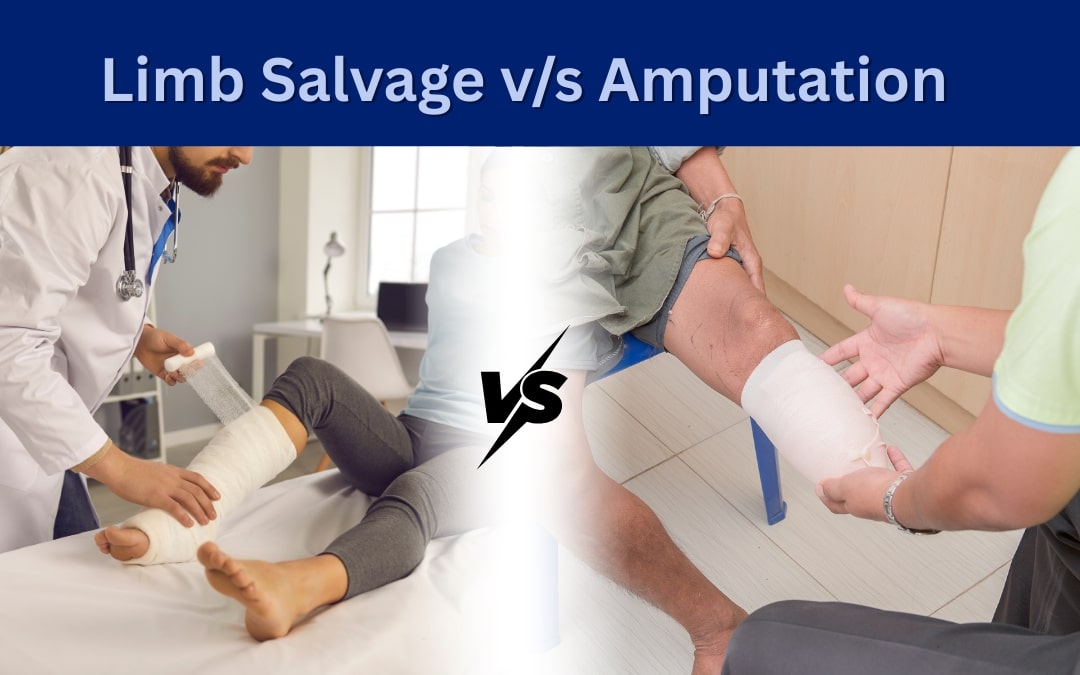
Suffering a severe limb injury can be life-changing. Beyond the initial pain and emergency shock, patients and families face one of the most critical medical decisions:
Should the limb be salvaged or amputated? The answer is not as simple as saving what appears visibly damaged or removing what seems irreparable.
Instead, the decision depends on scientific evaluation, patient health, and long-term functional outcomes.
This is where the importance of proper limb salvage vs amputation decision criteria becomes vital.
For those seeking complex trauma surgery in Kolkata, the right guidance can dramatically influence recovery and quality of life.
With over a decade of experience in trauma reconstruction, Dr. Reet Mukhopadhyay stands among the Best Trauma Surgeons in Kolkata, helping patients make informed decisions on whether limb salvage or amputation is the best path forward.
Understanding Severe Limb Trauma
Not all limb injuries are equal. Some fractures heal easily, while others are so catastrophic that reconstruction becomes a challenge. Severe trauma typically involves:
- Multiple fractures or open fractures
- Loss of blood flow (vascular injury)
- Crushing of muscles and tissues
- Severe contamination or infection
- Nerve destruction affecting function
When an injury involves a combination of these elements, the limb is medically termed a mangled extremity.
Such patients often require rapid surgical decisions to avoid complications such as infection, sepsis, or permanent disability.
Limb Salvage vs. Amputation: What Do They Mean?
Limb Salvage Surgery
Limb salvage is a highly skilled reconstructive approach where the aim is to restore the injured limb’s function, blood supply, and structure. The treatment may include:
- Fixation and bone reconstruction
- Vascular repair using microsurgical techniques
- Nerve grafting and repair
- Skin, muscle, or tissue transfer to cover defects
- Prevention and control of infection
- Repeated reconstructive surgeries, if required
The process requires multiple surgeries, time, skilled planning, and significant postoperative rehabilitation.
When successful, limb salvage can help patients walk, run, and use their limb againbut it demands patience and optimal surgical decision-making.
Amputation
Amputation removes a limb or part of a limb when it can no longer function or poses a serious threat to the patient’s health.
Modern advancements in prosthetics have made amputation a viable and sometimes superior option for mobility and independence.
Post-amputation rehabilitation includes:
- Prosthetic fitting and training
- Strength and balance training
- Pain management
- Lifestyle modification counseling
In certain cases, amputation can lead to a faster, safer, and more predictable recovery compared to a failed attempt at salvage.
When to Amputate vs Salvage a Limb?
One of the most common questions doctors hear from patients is: “When to amputate a mangled limb?” The answer lies in evidence-based assessment rather than emotional attachment to saving the limb at any cost.
Limb Salvage vs Amputation Decision Criteria
Doctors use clinical expertise along with validated scoring systems such as the Mangled Extremity Severity Score (MESS).
The evaluation focuses on:
- Blood flow (ischemia duration)
- Extent of nerve and muscle damage
- Level of bone loss
- Degree of contamination or infection
- Patient’s age and medical history
- Risk to life if the limb is retained
If the limb cannot be perfused (supplied with blood) within a crucial time window, or if restoring the limb poses life-threatening risks, amputation may be the safer option.
Factors Affecting Limb Salvage After Trauma
Not every limb can or should be salvaged. Important influencing factors include:
- Severe vascular compromise
- Extensive soft-tissue defects
- Prolonged ischemia (lack of blood)
- Presence of multi-system injuries
- Poor patient health (diabetes, smoking, anemia, etc.)
- Delayed arrival to trauma care
Limb salvage is an attempt to restore functionality not just preserve the limb cosmetically.
If the expected result is a painful, non-functional limb, amputation might offer a better physical and psychological outcome.
Limb Salvage Failure Risks
Even with the best surgical hands, limb salvage carries inherent risks. Possible complications include:
- Repeated infections
- Non-healing fractures
- Tissue death (necrosis)
- Severe chronic pain
- Need for multiple complex surgeries
- Secondary (delayed) amputation if salvage fails
A failed salvage attempt may cause more emotional and physical distress than a planned amputation.
Therefore, surgeons evaluate salvage potential with caution and clarity, considering long-term quality of life rather than short-term appearance.
Quality of Life After Limb Salvage vs Amputation
Many patients wonder what life looks like after each option. The “better” choice varies by individual needs and expected outcomes.
Functional Comparison-
|
Aspect |
Limb Salvage |
Amputation |
|---|---|---|
|
Mobility |
Slower recovery; may need multiple rehab cycles |
Quicker mobility with prosthesis |
|
Pain |
Can persist long-term |
Often reduces after adaptation |
|
Independence |
May require prolonged assistance |
Faster independence achievable |
|
Costs |
Generally higher due to multiple surgeries |
Lower overall in many cases |
Psychological Effects of Amputation After Trauma
Many fear amputation due to emotional shock. However:
- With support, most patients adapt well
- Advanced prosthetics restore confidence and independence
- Early counseling reduces fear and depression
- Patients with painful salvage attempts often experience more frustration than those with planned amputations
Rehabilitation teams must support emotional healing not just physical recovery.
Clear communication and realistic expectation setting are key.
Why Expert Surgical Decision-Making Matters?
Every severe trauma case is unique. The right evaluation can save lives, save function, and prevent years of suffering. For patients requiring complex trauma surgery in Kolkata, the surgeon’s expertise plays a crucial role in:
- Assessing reconstructive feasibility
- Deciding between salvage and amputation
- Preventing long-term disability
- Reducing surgical risks
- Enhancing recovery outcomes
Why Choose Dr. Reet Mukhopadhyay in Kolkata?
With extensive surgical experience in trauma reconstruction and limb preservation, Dr. Reet Mukhopadhyay is recognized among the Best Trauma Surgeons in Kolkata.
His principles of care emphasize:
- Accurate evaluation using advanced trauma scoring
- Ethical and patient-centered decision-making
- Expertise in microvascular and reconstructive techniques
- High success rates in limb salvage surgeries
- Transparent discussion with patients and families
His balanced approach ensures patients receive treatment that benefits not only their limb—but their life as a whole.
FAQs
- How do doctors decide between limb salvage vs amputation?
Doctors assess multiple limb salvage vs amputation decision criteria, including blood flow, nerve damage, soft-tissue viability, infection risk, and long-term functionality.
- When to amputate a mangled limb?
Amputation is recommended when the limb is non-viable, blood supply cannot be restored, salvage risks life, or the salvaged limb may lead to poor mobility and chronic disability.
- What are the psychological effects of amputation after trauma?
Patients may initially feel anxious or depressed, but most regain confidence with counseling, prosthetic use, and strong support systems.
- Is limb salvage always better than amputation?
Not necessarily. If Limb salvage failure risks are high, amputation may deliver faster recovery, improved mobility, and greater independence.
- Who should I consult for complex limb trauma in Kolkata?
Patients often choose Dr. Reet Mukhopadhyay, widely regarded among the Best Trauma Surgeons in Kolkata, for his expertise in decision-making and reconstructive trauma surgery.
