
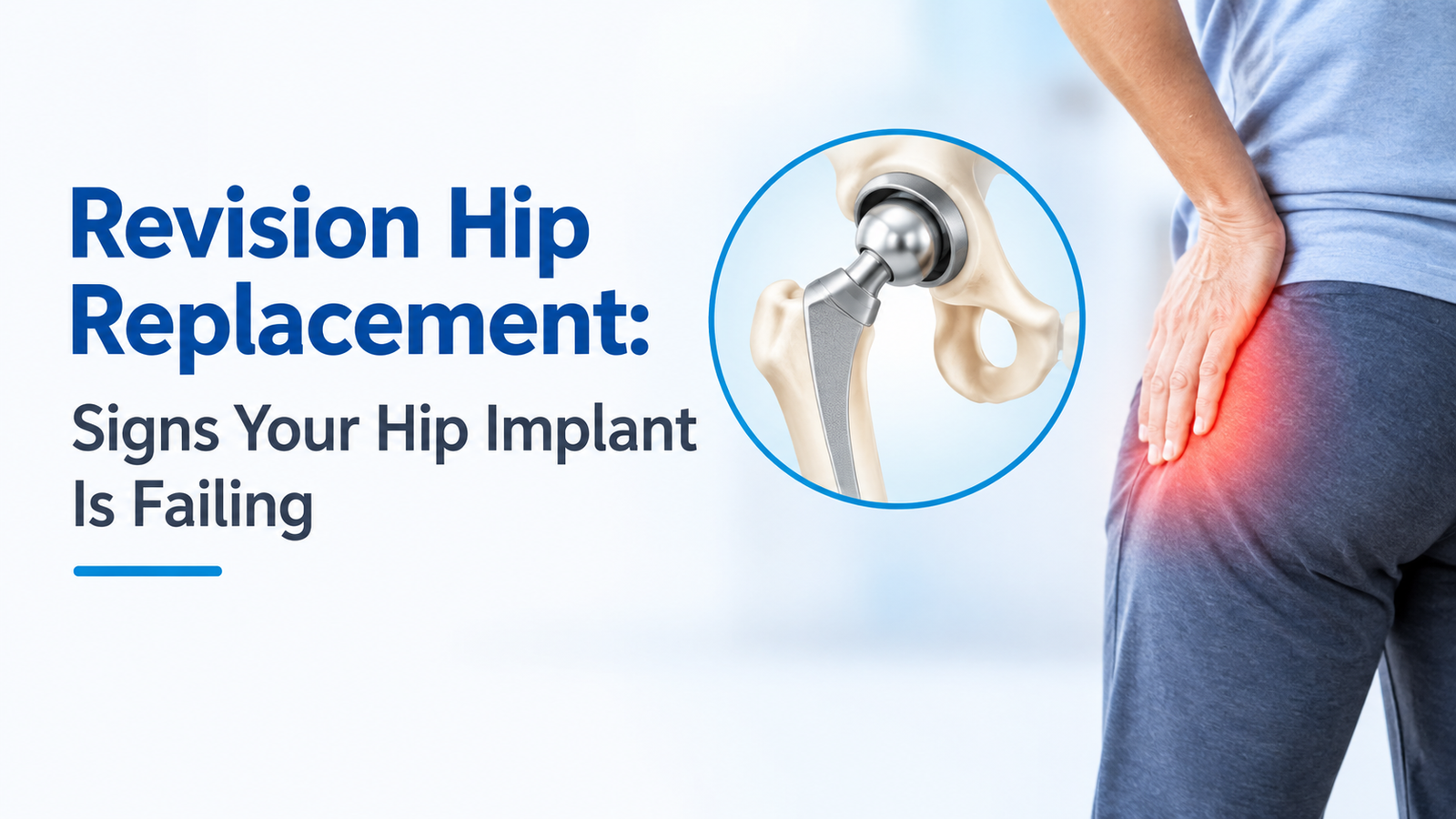
Total hip replacement has helped millions of patients walk without pain, return to daily activities, and regain their independence. However, like any mechanical device, a hip implant does not last forever. Over years of use, wear and tear, loosening, or infection can cause the implant to fail, leading to pain, instability, or reduced mobility. When this happens, a revision hip replacement — a procedure to replace or repair the original implant — becomes necessary. Recognizing the early warning signs of implant failure is crucial, because timely intervention by experienced hip replacement specialists can prevent further joint damage and make the revision surgery safer and more successful.
What Is Revision Hip Replacement?
Revision hip replacement is a surgical procedure performed to replace a previously implanted hip prosthesis that has worn out, loosened, become infected, or otherwise stopped functioning properly. It is more complex than a first-time (primary) hip replacement because it often involves removing old implant components, addressing bone loss, and reconstructing the hip joint with specialized implants designed for revision cases.
While modern hip implants are designed to last 15 to 25 years or longer, several factors can shorten this lifespan, including the patient’s activity level, body weight, implant type, and surgical technique used during the original procedure.
Why Do Hip Implants Fail?
Understanding the common causes of implant failure helps patients recognize when something may be wrong:
- Aseptic loosening: Over time, the bond between the implant and the surrounding bone can weaken, especially with normal wear of the implant surfaces. This is the most common reason for revision surgery.
- Infection: Bacteria can sometimes infect the area around the implant, either soon after surgery or years later, requiring removal and replacement of the components.
- Implant wear and osteolysis: Friction between the artificial ball and socket produces microscopic debris that can trigger bone loss around the implant.
- Dislocation: Repeated hip dislocations can damage the joint and indicate that the implant is not seated or functioning correctly.
- Fracture around the implant: A fall or trauma near the implant site, sometimes managed alongside pelvic trauma surgery, can crack the bone around the prosthesis.
- Implant recall or design issues: Certain older implant models have shown higher failure rates and may require proactive monitoring.
Warning Signs Your Hip Implant May Be Failing
Because implant problems can develop gradually, many patients dismiss early symptoms as normal aging or arthritis elsewhere in the body. Watch for the following signs:
- Persistent or worsening hip pain Pain that was previously well-controlled after your original surgery but has gradually returned, or new pain in the groin, thigh, or buttock, is one of the most common indicators of implant failure.
- A grinding, clicking, or popping sensation Unusual noises or sensations from the hip joint during movement can indicate wear between implant components or loosening of the prosthesis.
- Reduced range of motion or stiffness Difficulty bending, rotating the hip, or a feeling that the joint is “catching” can signal mechanical problems with the implant.
- A noticeable limp or instability If you feel like your hip is “giving way,” or you notice a change in your walking pattern, this may point to loosening or component wear.
- Swelling, warmth, or redness around the hip These symptoms, especially when accompanied by fever, may indicate an infection around the implant and require urgent evaluation.
- Leg length discrepancy A sense that one leg has become shorter or longer than the other since your original surgery can be a sign of implant subsidence or loosening.
- Reduced walking distance or increased reliance on walking aids If you find yourself needing a cane or walker more than before, or your walking distance has significantly decreased, it is worth having the joint assessed.
If you notice any combination of these signs, it is important to consult an orthopedic specialist rather than waiting for the symptoms to worsen.
How Is Implant Failure Diagnosed?
Diagnosing a failing hip implant typically involves:
- X-rays: To check implant position, alignment, and signs of loosening or bone loss around the components.
- Blood tests: Inflammatory markers can help identify infection.
- Joint aspiration: In suspected infection cases, fluid may be drawn from the joint for laboratory analysis.
- CT or MRI scans: Used in select cases to assess bone quality and soft tissue around the implant in greater detail.
An accurate diagnosis is essential, since the treatment approach for aseptic loosening differs significantly from that for an infected implant.
What Does Revision Surgery Involve?
Revision hip replacement is a more technically demanding procedure than the original surgery. It may involve:
- Removing the failed or worn implant components
- Addressing and reconstructing areas of bone loss, sometimes using bone grafts or specialized augments
- Implanting revision-specific prosthesis designs built for greater stability and durability
- In infection cases, a staged approach that may involve temporary spacers and a course of antibiotics before the final implant is placed
Because of this complexity, revision surgery should be performed by hip replacement specialists experienced in managing complex reconstructions, bone loss, and, when relevant, coordination with pelvic trauma surgery expertise for cases involving fractures around the implant.
Why Patients Should Not Delay Evaluation
Patients who underwent hip replacement years ago, whether locally or elsewhere, should not ignore new or returning hip symptoms. Early evaluation allows specialists to catch loosening or wear before it causes extensive bone loss, which generally makes revision surgery less complicated and improves the chances of a smooth recovery. The same principle applies broadly across orthopedic care — whether it involves a hip implant, a shoulder problem that may need shoulder arthroscopy, or a joint affected by prior trauma, prompt specialist consultation consistently leads to better long-term outcomes.
Final Thoughts
A well-functioning hip replacement can last for decades, but no implant is permanent. Recognizing the early signs of implant failure, such as new or returning pain, instability, unusual sounds from the joint, or changes in walking ability, allows you to seek help before the problem escalates. If you have had a hip replacement in the past and are experiencing any of these symptoms, don’t wait. Consult an experienced orthopedic specialist in Kolkata for a thorough evaluation to determine whether your implant needs attention, and to plan the right course of treatment for lasting relief and mobility.
Frequently Asked Questions (FAQs)
How long does a hip replacement implant usually last?
Most modern hip implants last 15 to 25 years, though this varies based on the patient’s activity level, weight, bone quality, and the implant type used during the original surgery. Regular follow-up with hip replacement specialists helps track implant condition over time, even in the absence of symptoms.
What is the most common reason for needing revision hip replacement?
Aseptic loosening, where the bond between the implant and surrounding bone weakens over time, is the most frequent cause of revision surgery. Infection, implant wear, dislocation, and fractures around the implant are other significant causes.
Is revision hip replacement more risky than the first surgery?
Revision surgery is generally more complex than a primary hip replacement because it may involve addressing bone loss and using specialized implant components. However, when performed by experienced specialists and diagnosed early, outcomes are typically very good, and delaying treatment usually increases surgical complexity rather than reducing risk.
Can a hip implant fail after a fall or accident?
Yes. Trauma near a previously implanted hip, such as a fall or road traffic accident, can fracture the bone around the prosthesis or dislodge the components. Such cases often require coordinated care involving pelvic trauma surgery expertise alongside revision hip replacement planning.
How do I know if my hip pain is from the implant or something else, like my back or knee?
Since hip, back, and knee problems can sometimes cause overlapping pain patterns, a clinical examination along with X-rays and, if needed, other imaging is used to pinpoint the source. If you also have unrelated joint concerns, such as shoulder pain that may need shoulder arthroscopy, it’s worth mentioning all your symptoms so your specialist can assess your overall musculoskeletal health.
