
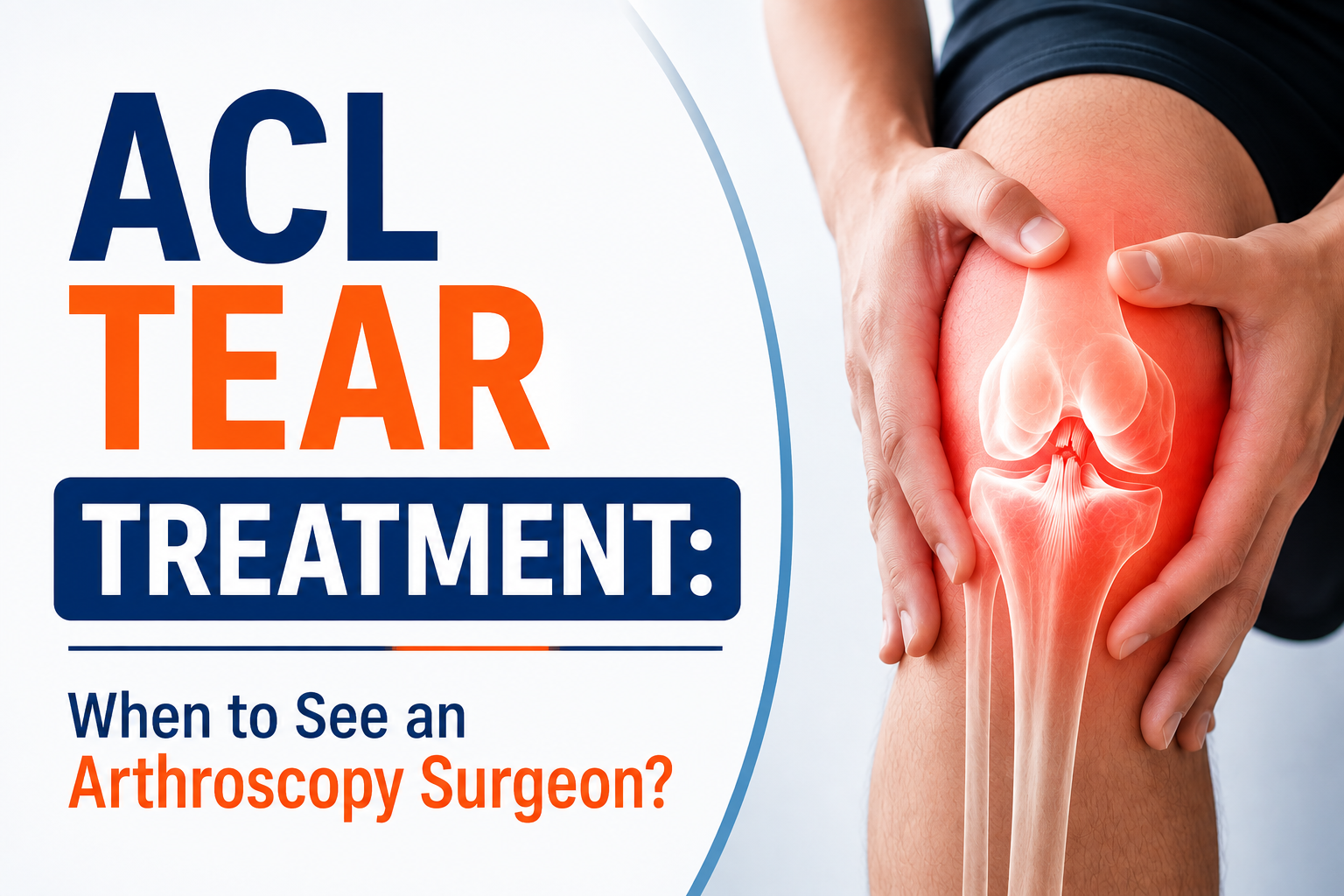
An anterior cruciate ligament (ACL) tear is one of the most common knee injuries, particularly among people who participate in sports, fitness activities, or movements involving sudden changes in direction. However, an ACL injury can also occur after a fall, road accident, twisting movement, or other trauma.
The ACL is an important ligament that helps stabilise the knee. When it is partially or completely torn, you may experience pain, swelling, difficulty walking, or a feeling that the knee is giving way. Treatment depends on several factors, including the severity of the tear, knee stability, activity level, associated injuries, and individual treatment goals.
If you have suffered a suspected ACL injury, knowing when to consult an arthroscopy surgeon in Kolkata can help you receive an appropriate diagnosis and treatment plan.
What Is an ACL Tear?
The anterior cruciate ligament connects the thigh bone (femur) to the shin bone (tibia) and helps control forward movement and rotation of the knee. ACL injuries commonly occur during sports involving sudden stopping, pivoting, jumping, or changing direction, although they can also result from accidents and other traumatic events.
ACL tears may be partial or complete. A complete tear can cause significant instability, although symptoms vary between individuals. Some people may feel their knee giving way during everyday activities, while others mainly experience instability during running, jumping, or pivoting sports.
Common Symptoms of an ACL Tear
Recognising the symptoms of an ACL injury is important because early assessment can help determine the appropriate course of treatment.
Common symptoms include:
- A popping sensation or sound at the time of injury
- Sudden knee pain
- Rapid swelling around the knee
- Difficulty bearing weight
- Reduced range of motion
- Knee instability or a feeling that the knee may give way
- Difficulty returning to sports or physically demanding activities
If these symptoms occur after a twisting injury, fall, or sports accident, consulting an orthopaedic specialist is advisable.
When Should You Consult an Arthroscopy Surgeon?
1. Your Knee Keeps Giving Way
One of the clearest reasons to consult an arthroscopy surgeon is recurrent knee instability.
After an ACL tear, the knee may feel loose or unstable, particularly when walking on uneven surfaces, turning quickly, running, or participating in sports. Repeated instability can affect other structures within the knee, including the meniscus and cartilage.
An arthroscopy specialist can evaluate the stability of your knee and determine whether rehabilitation alone may be sufficient or whether ACL reconstruction should be considered.
2. You Want to Return to High-Impact Sports
If you participate in football, basketball, cricket, tennis, badminton, athletics, or other activities requiring frequent pivoting and sudden changes in direction, an ACL tear may significantly affect your performance.
Treatment decisions should consider your desired activity level. Active individuals with an unstable ACL may be considered for reconstruction depending on their specific circumstances. AAOS guidance notes that ACL reconstruction may be considered particularly in younger and more active patients to reduce the risk of future meniscus-related problems.
A specialist can discuss your activity goals and help determine an appropriate treatment strategy.
3. You Have a Complete ACL Tear
Complete ACL tears often have a less favourable outcome with non-surgical treatment when they cause persistent instability. However, surgery is not automatically necessary for every person with a complete tear.
Factors such as age, activity level, knee stability, associated injuries, and personal goals influence treatment decisions. Some people with complete ACL tears who have stable knees and participate in lower-demand activities may be managed with rehabilitation.
An experienced arthroscopy surgeon in Kolkata can assess your condition and explain whether conservative treatment or reconstruction may be appropriate.
4. You Have an ACL Tear Along With a Meniscus or Other Injury
ACL injuries frequently occur alongside damage to other structures within the knee. Meniscus tears, cartilage damage, or injuries to other ligaments may accompany an ACL tear.
When multiple structures are injured, treatment can become more complex. In appropriate cases, arthroscopic procedures can be used to address ACL injuries and associated knee problems.
An orthopaedic specialist can use physical examination and appropriate imaging, such as MRI, to understand the extent of the injury and develop an individualised treatment plan.
5. Your Symptoms Continue Despite Rehabilitation
Not every ACL tear requires immediate surgery. Depending on the injury, a doctor may initially recommend physiotherapy and rehabilitation to improve strength, movement, balance, and knee function.
However, if you continue experiencing instability, pain, difficulty performing normal activities, or an inability to return to your desired level of activity despite appropriate rehabilitation, you should consult an arthroscopy surgeon for further evaluation.
Non-surgical treatment can be appropriate for selected patients, including some people with partial tears without instability and individuals with lower activity demands.
How Is an ACL Tear Diagnosed?
Diagnosis generally begins with a detailed medical history and physical examination. Your doctor will assess knee movement, stability, swelling, tenderness, and ligament function.
Imaging may also be recommended. An MRI can help assess the ACL and identify associated injuries involving the meniscus, cartilage, or other ligaments.
A proper diagnosis is essential because treatment should be based on the individual patient’s injury rather than an MRI result alone.
ACL Tear Treatment Options
Treatment depends on the type and severity of the injury.
Non-Surgical Treatment
For selected patients, treatment may include:
- Rest and activity modification
- Physiotherapy
- Muscle-strengthening exercises
- Balance and stability training
- Pain and swelling management
- A knee brace when appropriate
Rehabilitation aims to restore knee function and improve strength and stability.
ACL Reconstruction
For patients in whom surgery is indicated, ACL reconstruction is commonly performed using a tendon graft to replace the damaged ligament. Arthroscopic techniques are frequently used for ACL reconstruction.
According to the AAOS clinical practice guideline, when surgical treatment is indicated for an acute isolated ACL tear, early reconstruction is preferred because the risk of additional cartilage and meniscal injury begins to increase within three months.
The exact timing, however, should be determined by the treating surgeon based on the patient’s injury, swelling, range of motion, associated injuries, and overall circumstances.
Why Consult a Trauma Surgeon After an ACL Injury?
ACL tears can occur during sports injuries, falls, road accidents, and other traumatic events. If the injury involves significant trauma or suspected damage to multiple structures, evaluation by a qualified Trauma Surgeon in Kolkata may be appropriate.
A trauma specialist can assess the overall injury and help determine whether urgent treatment, further imaging, rehabilitation, or surgical intervention is required.
Why Choose an Experienced Arthroscopy Surgeon in Kolkata?
ACL treatment requires careful evaluation because every injury is different. An experienced arthroscopy surgeon in Kolkata can assess knee stability, review imaging, identify associated injuries, and discuss both surgical and non-surgical treatment options.
If you are searching for an ACL surgeon or knee arthroscopy specialist in Kolkata, it is important to choose an experienced orthopaedic surgeon with specific expertise in knee and sports injuries. ACL reconstruction is a knee procedure that may be recommended when the ligament tear causes persistent instability or affects your ability to return to sports and other activities. The appropriate treatment depends on factors such as the severity of the injury, knee stability, associated meniscus or cartilage injuries, activity level, and overall health.
Conclusion
An ACL tear does not always mean that surgery is necessary. Some patients can achieve good function with structured rehabilitation, while others particularly those with persistent instability, associated injuries, or higher activity demands may benefit from ACL reconstruction.
If you have suffered a knee injury and are experiencing swelling, pain, instability, or difficulty returning to normal activities, do not ignore the symptoms. Consulting an arthroscopy surgeon in Kolkata can help you understand the extent of your injury and determine the most suitable treatment approach.
Frequently Asked Questions
1. Can an ACL tear heal without surgery?
Some partial ACL tears and selected complete tears can be managed without surgery, particularly when the knee remains stable and the person’s activity demands are lower. Treatment should be decided after a proper clinical assessment.
2. Is ACL reconstruction performed using arthroscopy?
Yes. ACL reconstruction is commonly performed using arthroscopic techniques, allowing the surgeon to work inside the knee through small incisions.
- When should I see an arthroscopy surgeon after an ACL injury?
You should seek specialist evaluation if you have persistent pain, swelling, instability, difficulty walking, recurrent giving-way episodes, or difficulty returning to your normal activities after a suspected ACL injury.
4. Can an ACL tear occur with a meniscus tear?
Yes. ACL injuries can occur together with meniscus, cartilage, or other ligament injuries. Imaging and clinical examination can help identify associated damage.
5. Can I return to sports after ACL reconstruction?
Many patients undergo rehabilitation with the goal of returning to sports, but recovery varies according to the injury, surgical treatment, rehabilitation progress, and individual factors. Your surgeon and physiotherapy team can guide your return-to-activity plan.
