
Hip replacement surgery is one of the most successful orthopedic procedures for relieving chronic hip pain and restoring mobility in patients suffering from severe joint damage.
People with conditions such as osteoarthritis, rheumatoid arthritis, avascular necrosis, or traumatic hip injuries often benefit from this life-changing surgery.
While hip replacement has a very high success rate, one potential complication that concerns both patients and surgeons is hip joint dislocation after surgery.
Advancements in hip replacement implant technology have significantly improved surgical outcomes and reduced complications over the years.
One of the most promising innovations in modern orthopedics is the Dual Mobility Hip Replacement, which is specifically designed to reduce the chances of post-surgical instability.
Dual mobility implants have gained popularity worldwide because they provide improved stability and a greater range of motion compared to traditional implants.
These implants are often considered among the Best Hip Implants to Prevent Dislocation, especially for patients who have a higher risk of instability after surgery.
With the guidance of an experienced Hip Replacement surgeon in kolkata, patients can now access advanced surgical solutions and the latest Hip Replacement Implants treatment in kolkata that focus on both long-term durability and improved joint stability.
What Happens During Hip Replacement Surgery?
Hip replacement surgery, also known as total hip arthroplasty, involves replacing the damaged parts of the hip joint with artificial components known as implants.
The hip joint is a ball-and-socket joint where the femoral head (ball) fits into the acetabulum (socket) of the pelvis.
When this joint becomes severely damaged due to arthritis or injury, it can lead to persistent pain, stiffness, and limited movement.
During hip replacement surgery, the orthopedic surgeon removes the damaged cartilage and bone and replaces them with specially designed prosthetic components.
These artificial components mimic the function of a natural hip joint, allowing smoother movement and significantly reducing pain.
Modern hip replacement implant technology has greatly improved the design, materials, and performance of these implants, ensuring better durability and mobility for patients.
Components of a Hip Implant
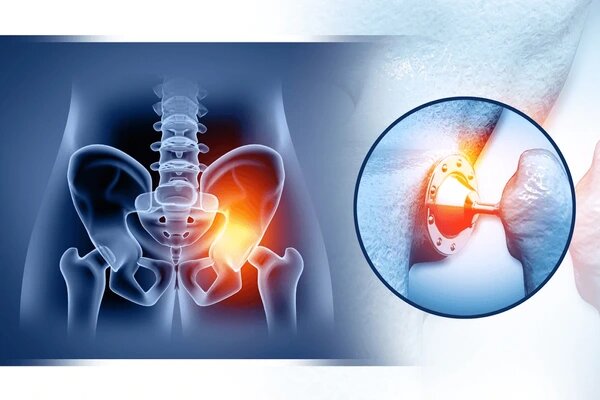
A standard hip replacement implant typically consists of several parts that work together to recreate the natural joint.
- Femoral Stem: A metal stem that is inserted into the thigh bone (femur) to provide support for the artificial joint.
- Femoral Head: The artificial ball that replaces the natural head of the femur.
- Acetabular Cup: The socket component that is placed in the pelvic bone.
- Liner: A cushioning layer placed inside the cup to allow smooth movement of the ball.
Together, these components form a stable and functional artificial hip joint.
Hip Replacement Implant Types
Common Hip Replacement Implant Types Used Today
Orthopedic surgeons choose from different Hip Replacement Implant Types depending on the patient’s condition, bone quality, age, and activity level. Each implant type is designed to provide optimal stability and durability.
Traditional Hip Implants
Traditional implants have been used successfully for many years and include:
- Metal-on-Polyethylene Implants: A metal ball that moves against a plastic liner.
- Ceramic-on-Ceramic Implants: Both the ball and socket liner are made from ceramic materials.
- Ceramic-on-Polyethylene Implants: A ceramic ball paired with a plastic liner for reduced wear.
These implants provide good outcomes for many patients but may still carry a small risk of dislocation in certain cases.
Advanced Hip Replacement Implants
With advancements in orthopedic technology, surgeons now have access to Advanced Hip Replacement Implants that offer improved joint stability and durability.
These include:
- Dual mobility hip implants
- Highly cross-linked polyethylene implants
- Customized implant systems
Among these innovations, Dual Mobility Hip Replacement has emerged as one of the most effective solutions for reducing dislocation risk after surgery.
What Is a Dual Mobility Hip Implant?
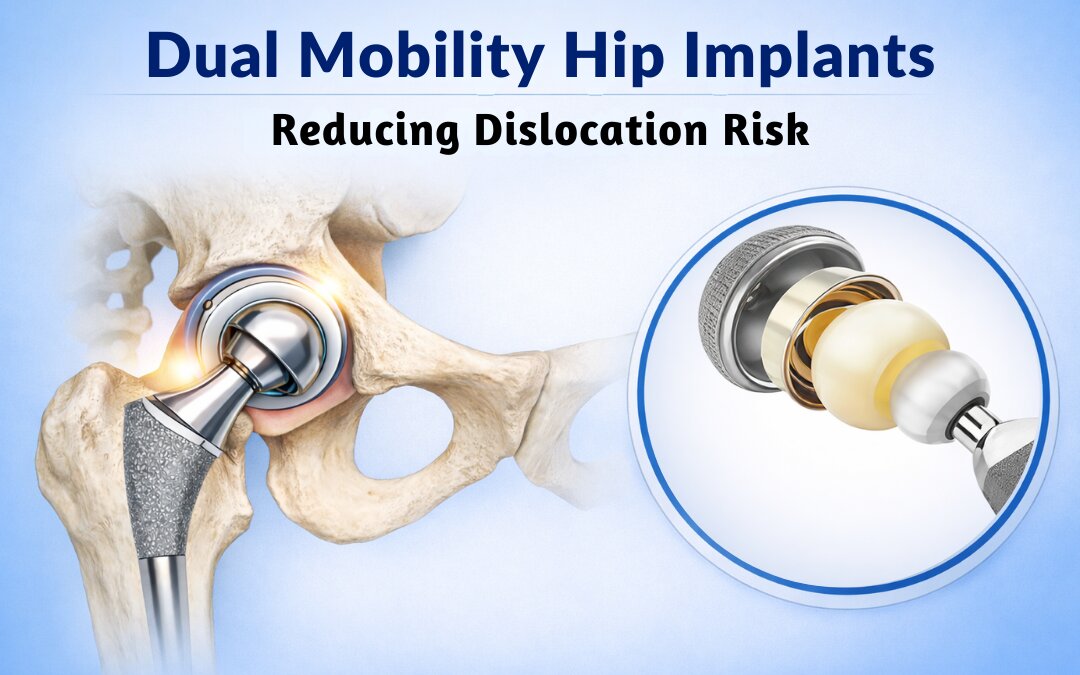
A Dual Mobility Hip Implant is a specially designed hip implant that includes two points of movement (or articulation) instead of the single articulation used in traditional implants.
This unique design improves joint stability and significantly reduces the risk of dislocation.
The dual mobility system consists of a small metal femoral head that fits into a larger polyethylene liner.
This liner then moves within a metal acetabular cup attached to the pelvis.
Key Design Concept
The main principle behind Dual Mobility Hip Replacement is the presence of two moving surfaces that work together to increase the joint’s range of motion and stability.
The system includes:
- A small femoral head that moves inside a polyethylene liner
- A mobile polyethylene liner that moves inside the metal socket
This dual articulation allows the implant to move more naturally while reducing mechanical stress on the joint.
Why It Is Considered Advanced
Dual mobility implants are considered part of modern hip replacement implant technology because they offer several advantages over conventional designs.
These implants provide:
- A larger effective head size
- Greater stability
- Increased range of motion
- Lower risk of dislocation
Because of these features, they are widely regarded as some of the Best Hip Implants to Prevent Dislocation.
Why Hip Replacement Dislocation Happens
Although hip replacement surgery is generally very successful, dislocation can occur when the artificial ball moves out of the socket. Understanding Why Hip Replacement Dislocation Happens is essential in preventing this complication.
Common Hip Replacement Dislocation Causes
Several factors can contribute to instability after hip replacement surgery.
Some of the most common Hip Replacement Dislocation Causes include:
- Weak or damaged hip muscles
- Improper positioning of the implant
- Sudden twisting movements or falls
- Previous hip surgeries
- Neurological disorders affecting balance and coordination
In some cases, dislocation may occur if the implant design does not provide enough stability for the patient’s activity level.
This is why many surgeons now recommend Dual Mobility Hip Replacement for patients who may be at a higher risk of dislocation.
How Dual Mobility Hip Replacement Reduces Dislocation Risk ?
One of the key reasons for the growing popularity of dual mobility implants is their ability to provide superior joint stability.
Understanding How Dual Mobility Hip Replacement Reduces Dislocation Risk helps patients appreciate the advantages of this advanced implant design.
Larger Effective Head Size
Dual mobility implants effectively increase the size of the femoral head, which improves stability and makes it more difficult for the joint to dislocate.
Dual Articulation System
The implant allows movement at two different points:
- Between the femoral head and polyethylene liner
- Between the polyethylene liner and metal socket
This design distributes movement more evenly and reduces stress on the joint.
Improved Range of Motion
The dual mobility design allows the hip joint to move more freely before any mechanical impingement occurs, which significantly reduces the chances of dislocation.
Enhanced Joint Stability
By increasing the contact area between components, dual mobility implants maintain better joint stability during daily movements.
For these reasons, Dual Mobility Hip Replacement is considered one of the Best Hip Implants to Prevent Dislocation.
Dual Mobility Hip Implant Benefits
The popularity of Dual Mobility Hip Replacement continues to grow because it offers several important advantages for patients undergoing hip replacement surgery.
Some of the key Dual Mobility Hip Implant Benefits include:
- Reduced risk of hip dislocation
- Greater range of motion
- Improved joint stability
- Longer implant lifespan
- Better outcomes in complex cases
These implants are particularly beneficial for patients who require Advanced Hip Replacement Implants due to specific medical conditions or surgical history.
Ideal for High-Risk Patients
Dual mobility implants are especially helpful for patients who may have a higher chance of instability, including elderly patients or those undergoing revision hip surgery.
Because of their improved design, these implants are often recommended as the Best Hip Implants to Prevent Dislocation.
Who Is a Candidate for Dual Mobility Hip Replacement
Not every patient requires a dual mobility implant, but it can be highly beneficial in certain cases.
Determining Who Is a Candidate for Dual Mobility Hip Replacement requires careful evaluation by an orthopedic specialist.
Patients With Higher Risk of Dislocation
Dual mobility implants may be recommended for:
- Elderly patients with weaker hip muscles
- Patients with neurological disorders
- Patients with hip instability
- Individuals with previous hip surgeries
Patients Undergoing Revision Hip Surgery
Patients who require a second hip replacement due to implant failure or instability often benefit from dual mobility systems.
Active Patients
People who wish to maintain an active lifestyle after surgery may also benefit from the enhanced stability provided by these implants.
Consulting an experienced Hip Replacement surgeon in kolkata can help determine the most suitable implant type for each patient.
Advances in Hip Replacement Implant Technology
Latest Developments in Hip Replacement Implant Technology
Orthopedic technology has advanced significantly over the past few decades.
Modern hip replacement implant technology now focuses on improving implant longevity, reducing complications, and enhancing patient mobility.
Some of the most important innovations include:
- Highly durable implant materials
- Improved implant fixation methods
- Advanced bearing surfaces
- Customized implants for individual anatomy
- Advanced Hip Replacement Implants such as dual mobility systems
These innovations allow surgeons to perform safer and more effective hip replacement procedures.
Why Choosing the Right Surgeon Matters
Importance of an Experienced Hip Replacement Surgeon
The success of hip replacement surgery depends not only on the implant but also on the surgeon’s expertise.
Choosing a skilled orthopedic specialist ensures the best possible outcomes.
Dr. Reet Mukhopadhyay is a highly experienced Hip Replacement surgeon in kolkata, known for providing advanced joint replacement procedures and personalized patient care.
With over 10 years of experience and more than 500 successful surgeries, he offers modern Hip Replacement Implants treatment in kolkata using the latest surgical techniques and implant technologies.
Benefits of Choosing an Experienced Surgeon
An experienced surgeon ensures:
- Proper implant selection
- Accurate surgical technique
- Reduced complication risks
- Faster recovery
- Long-term implant success
Conclusion
Dual mobility implants represent one of the most significant breakthroughs in modern hip replacement surgery.
By offering enhanced stability and a greater range of motion, Dual Mobility Hip Replacement has become an effective solution for reducing the risk of dislocation.
Understanding What Is a Dual Mobility Hip Implant, the various Dual Mobility Hip Implant Benefits, and How Dual Mobility Hip Replacement Reduces Dislocation Risk helps patients make informed decisions about their treatment options.
If you are considering hip replacement surgery, consulting an experienced Hip Replacement surgeon in kolkata like Dr. Reet Mukhopadhyay can help you explore the latest Advanced Hip Replacement Implants and receive the most effective Hip Replacement Implants treatment in kolkata for long-term mobility and comfort.
