
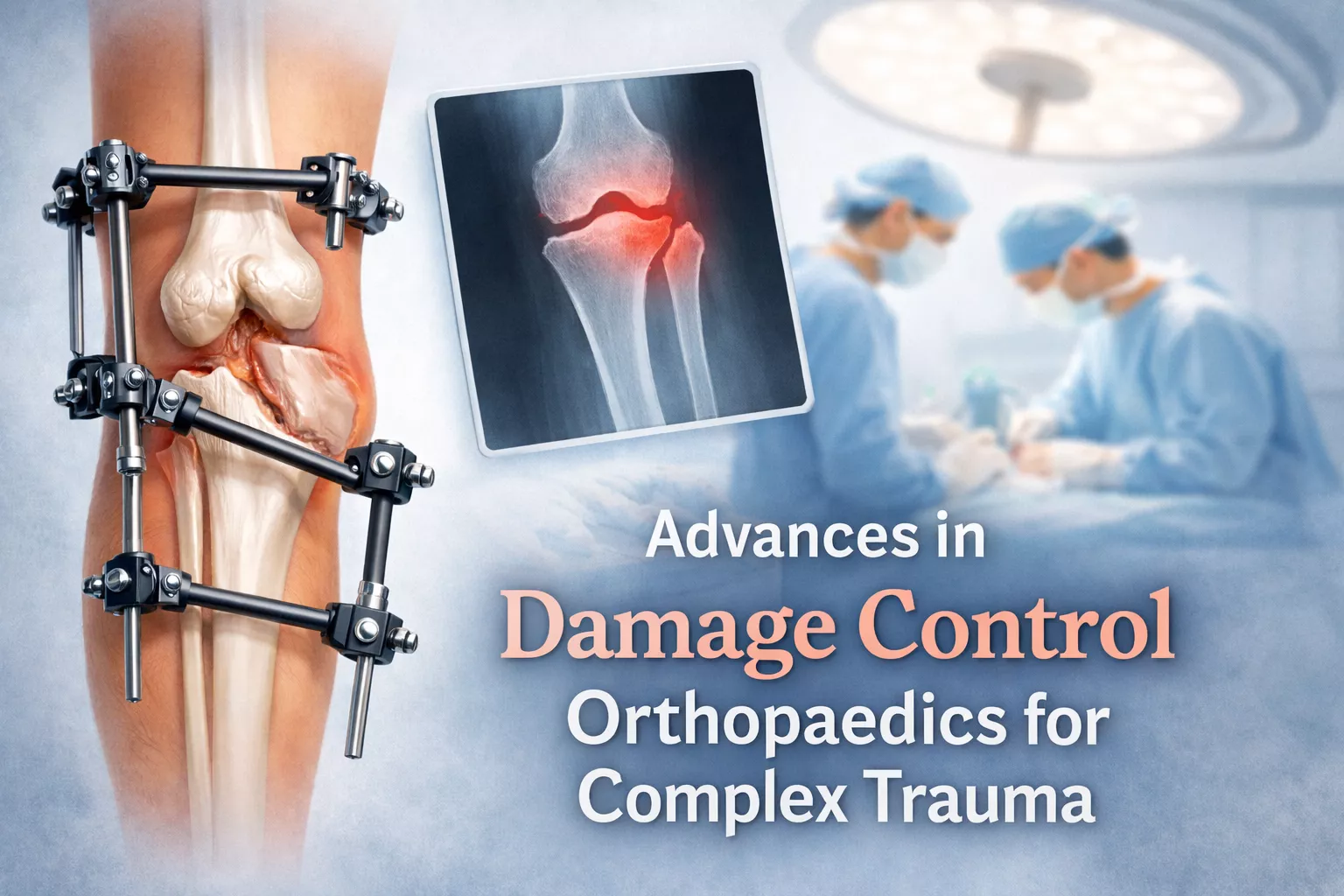
Complex trauma is one of the most demanding challenges in modern orthopaedics. Patients often arrive with multiple fractures, internal injuries, severe blood loss, and unstable vital signs.
In such situations, attempting definitive fracture fixation immediately can place immense physiological stress on the body and increase the risk of complications or even mortality.
This is where advances in damage control orthopaedics have brought a paradigm shift in trauma care.
Damage control orthopaedics (DCO) focuses on stabilising life-threatening conditions first, followed by staged fracture management once the patient’s condition improves.
Under the expertise of Dr. Reet Mukhopadhyay, who has successfully performed over 3000+ knee, hip, trauma, and pelvic surgeries, this approach has significantly improved outcomes for patients requiring damage control orthopaedics for complex trauma.
What Is Damage Control Orthopaedics (DCO)?
Damage control orthopaedics is a strategic, staged approach used in the orthopaedic management of severely injured patients.
Instead of performing long and invasive definitive surgeries at the outset, DCO prioritises patient survival and physiological stability.
Core Principles of Damage Control Orthopaedics
- Stabilising the patient’s airway, breathing, and circulation
- Rapid control of bleeding and soft tissue damage
- Minimising surgical time during the acute phase
- Using temporary methods for fracture stabilisation
- Planning definitive fixation only after systemic recovery
This approach is especially effective in damage control orthopaedics for complex trauma, where patients may have injuries affecting multiple organ systems.
Why Damage Control Orthopaedics Is Crucial in Complex Trauma?
Challenges in Polytrauma Patients
Polytrauma patients often suffer from:
- Haemorrhagic shock
- Coagulopathy
- Hypothermia
- Severe inflammatory response
These factors together form the “lethal triad,” making early extensive surgery extremely risky. In such cases, temporary fracture fixation in trauma surgery helps reduce surgical stress and allows time for critical care stabilisation.
When Is DCO Preferred?
Damage control orthopaedics is commonly used in:
- Patients with unstable blood pressure
- Severe pelvic or femoral fractures
- Multiple long-bone fractures
- Associated chest, abdominal, or head injuries
Damage Control vs Early Total Care Orthopaedics
One of the most important decisions in trauma care is choosing between damage control vs early total care orthopaedics.
Early Total Care (ETC)
- Definitive fracture fixation performed early
- Suitable for haemodynamically stable patients
- Shortens hospital stay in selected cases
Damage Control Orthopaedics (DCO)
- Temporary stabilisation in the initial phase
- Definitive surgery delayed until recovery
- Ideal for unstable or borderline patients
Factors such as injury severity score, blood lactate levels, associated injuries, and overall physiological status guide this decision-making process.
Modern Damage Control Orthopaedic Techniques
Continuous innovation has refined modern damage control orthopaedic techniques, making them safer and more effective.
External Fixation in Polytrauma Patients
External fixation in polytrauma patients is a cornerstone of DCO.
Key advantages include:
- Quick application with minimal blood loss
- Reduced operative time
- Effective stabilisation of fractures
- Improved pain control
External fixators are commonly used for femur fractures, open fractures, and pelvic injuries, especially in the acute trauma setting.
Temporary Fracture Fixation in Trauma Surgery
Other techniques include:
- Pelvic binders and external pelvic fixators
- Temporary intramedullary devices
- Modular fixation systems
These methods stabilise the skeleton while allowing intensive care teams to focus on resuscitation and organ support.
Staged Fracture Management in Trauma
Staged fracture management in trauma is the foundation of damage control orthopaedics.
Phase 1: Emergency Stabilisation
- Adherence to ATLS protocols
- Control of bleeding and soft tissue damage
- Rapid temporary fracture fixation
Phase 2: Critical Care Optimisation
- Correction of acidosis and coagulopathy
- Normalisation of body temperature
- Haemodynamic and respiratory stabilisation
Phase 3: Definitive Orthopaedic Surgery
- Conversion from external to internal fixation
- Anatomical fracture alignment
- Joint reconstruction when required
This staged approach significantly reduces complications such as acute respiratory distress syndrome (ARDS) and multi-organ failure.
Latest Innovations in Orthopaedic Trauma Care
The latest innovations in orthopaedic trauma care have further strengthened damage control strategies.
Technological Advances
- Improved external fixation systems
- Image-guided fracture stabilisation
- Hybrid fixation techniques
- Integration of damage control resuscitation
Multidisciplinary Trauma Management
Optimal outcomes depend on collaboration between:
- Orthopaedic trauma surgeons
- General and vascular surgeons
- Intensivists and anaesthesiologists
- Rehabilitation specialists
Such teamwork has transformed survival rates and long-term function in complex trauma patients.
Role of Expertise in Complex Trauma Surgery
Experience and clinical judgement play a crucial role in damage control orthopaedics.
Why Expertise Matters
- Correct identification of patients requiring DCO
- Precise timing for conversion to definitive fixation
- Lower complication and infection rates
Patients seeking the best complex trauma surgery in Kolkata benefit greatly from surgeons with extensive trauma experience and a deep understanding of modern protocols.
Complex Trauma Surgery in Kolkata: What Patients Can Expect
Comprehensive Trauma Care
Patients undergoing complex trauma surgery in Kolkata can expect:
- 24/7 emergency trauma services
- Advanced imaging and diagnostic support
- Well-equipped intensive care units
- Modern operation theatres
Patient-Centred Outcomes
- Faster stabilisation and recovery
- Reduced surgical complications
- Better long-term mobility and function
Why Choose Dr. Reet Mukhopadhyay for Complex Trauma Care?
- Over 3000+ successful orthopaedic and trauma surgeries
- Special expertise in damage control orthopaedics for complex trauma
- Trusted among the Best Complex Trauma Doctors In Kolkata
- Evidence-based, patient-first treatment philosophy
FAQs: Advances in Damage Control Orthopaedics
What are advances in damage control orthopaedics?
They include improved external fixation systems, staged surgical protocols, and multidisciplinary trauma care aimed at improving survival in severely injured patients.
When is damage control orthopaedics preferred over early total care?
It is preferred in unstable patients where long surgeries may worsen physiological stress and increase complications.
How does external fixation help in polytrauma patients?
External fixation in polytrauma patients provides rapid fracture stability, reduces pain, and allows time for systemic recovery.
Is staged fracture management safe and effective?
Yes, staged fracture management in trauma is proven to reduce complications and improve outcomes in complex injuries.
Where can I get the best complex trauma surgery in Kolkata?
Patients can consult Dr. Reet Mukhopadhyay, widely regarded among the Best Complex Trauma Doctors In Kolkata for advanced and reliable trauma care.
Conclusion
The evolution of advances in damage control orthopaedics has revolutionised how complex trauma is treated worldwide.
By prioritising life-saving measures, using modern damage control orthopaedic techniques, and adopting staged fracture management in trauma, surgeons can significantly improve survival and functional outcomes.
For patients seeking expert orthopaedic management of severely injured patients, Dr. Reet Mukhopadhyay offers trusted, advanced, and compassionate care, making him a leading choice for complex trauma surgery in Kolkata.
