
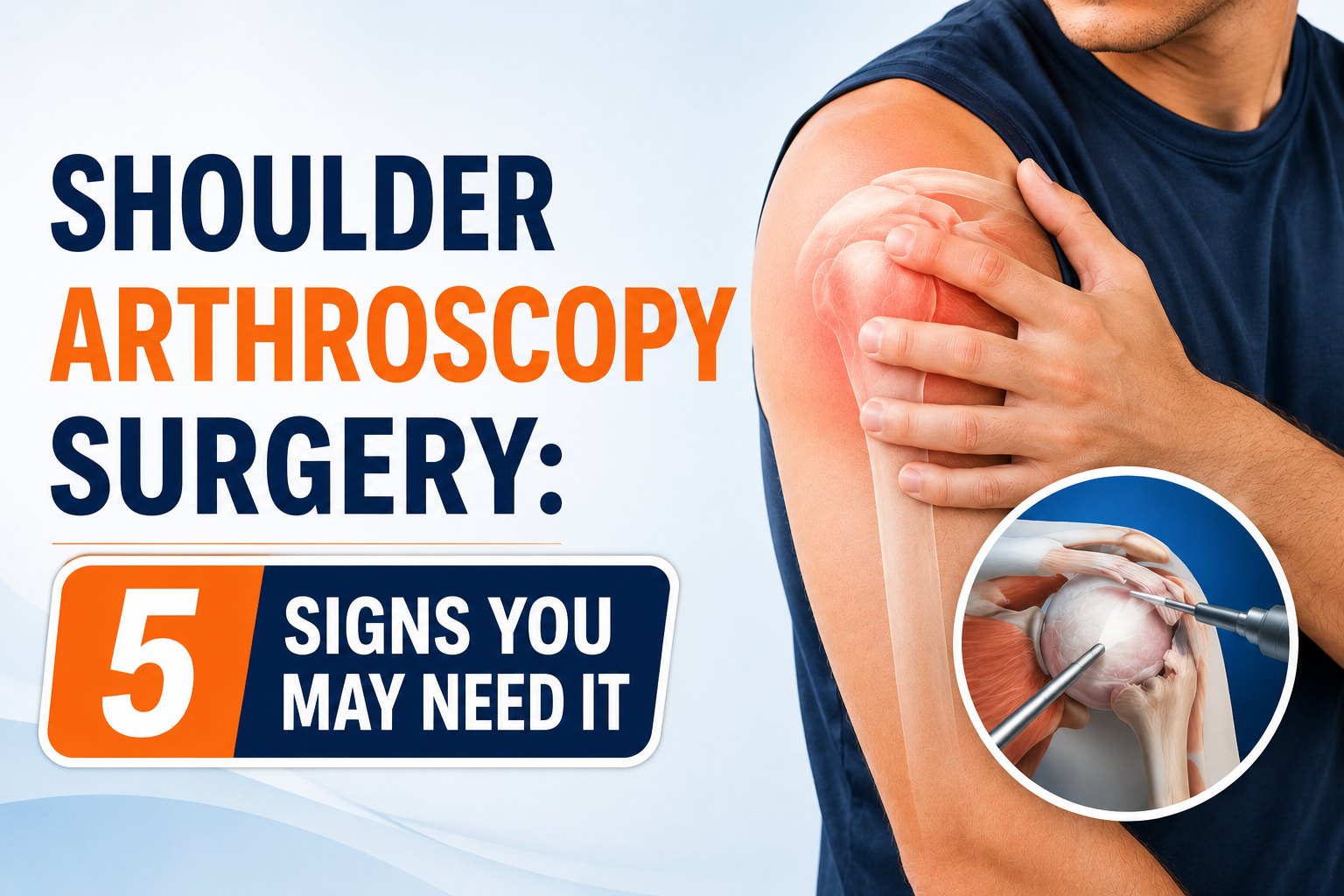
Shoulder pain can make everyday activities such as reaching overhead, dressing, lifting objects, or sleeping on your side difficult. While many shoulder problems improve with rest, medication, physiotherapy, or other non-surgical treatments, persistent symptoms may indicate an underlying injury that requires further evaluation.
Shoulder arthroscopy is a minimally invasive procedure in which a small camera, called an arthroscope, is inserted through small incisions to examine and treat problems inside the shoulder joint. It may be used for conditions such as rotator cuff tears, labral injuries, recurrent shoulder instability, impingement, and certain cartilage problems.
If you are experiencing ongoing shoulder problems, consulting an experienced arthroscopy surgeon in Kolkata can help determine whether surgical shoulder arthroscopy doctors are appropriate for your condition.
What Is Shoulder Arthroscopy?
Shoulder arthroscopy allows a surgeon to examine the structures inside the shoulder using a small camera connected to a monitor. Additional miniature instruments can be inserted through other small openings to repair or remove damaged tissue.
Compared with traditional open procedures, arthroscopic surgery generally requires smaller incisions and causes less disruption to surrounding soft tissues. Many rotator cuff repairs, for example, are now performed arthroscopically.
However, shoulder arthroscopy is not automatically recommended for every person with shoulder pain. The decision depends on the cause and severity of the problem, symptoms, examination findings, imaging results, activity level, and response to non-surgical treatment.
5 Signs You May Need Shoulder Arthroscopy Surgery
1. Persistent Shoulder Pain Despite Non-Surgical Treatment
One of the most important warning signs is shoulder pain that continues despite appropriate non-surgical treatment.
Doctors may initially recommend measures such as activity modification, physiotherapy, medication, or injections depending on the diagnosis. If pain continues and interferes with daily activities despite these approaches, further evaluation may be necessary.
Persistent pain, particularly pain that affects sleep or makes normal movements difficult, should not simply be ignored. A consultation with qualified shoulder arthroscopy doctors in Kolkata can help identify whether the pain is related to a rotator cuff tear, labral injury, impingement, instability, or another shoulder condition.
2. You Have Significant Weakness or Loss of Shoulder Function
Shoulder pain accompanied by noticeable weakness can indicate damage to the rotator cuff or other important structures.
You may notice difficulty lifting your arm, reaching overhead, carrying objects, or performing activities that were previously easy. Rotator cuff tears commonly cause pain with lifting or lowering the arm, weakness during lifting or rotation, and difficulty with routine activities.
Significant weakness and loss of function are among the factors that may support consideration of surgery in appropriately diagnosed rotator cuff injuries.
An arthroscopy surgeon in Kolkata can assess your strength, range of motion, and shoulder stability and may recommend imaging such as an MRI or ultrasound when appropriate.
3. You Experienced a Sudden Shoulder Injury
A sudden injury from a fall, sports activity, accident, or heavy lifting can damage the shoulder structures.
An acute rotator cuff tear, for example, may cause sudden pain and immediate weakness. Shoulder dislocations can also damage the labrum and supporting structures, potentially resulting in recurrent instability.
If you experience severe pain, weakness, deformity, or difficulty moving your arm following an injury, seek prompt medical assessment. Depending on the injury, surgical treatment may sometimes be recommended, particularly when there is a significant structural tear or recurrent instability.
A qualified Trauma Surgeon in Kolkata can assess traumatic shoulder injuries and coordinate appropriate treatment when surgical intervention is required.
4. You Have Recurrent Shoulder Dislocations or Instability
Does your shoulder repeatedly feel as though it is slipping out of place? Recurrent dislocation or instability may indicate damage to the labrum, ligaments, or other stabilising structures.
Shoulder arthroscopy can be used for certain cases of recurrent shoulder instability and labral injuries. During the procedure, the surgeon can inspect the joint and repair damaged structures using specialised instruments.
People involved in sports or activities requiring repeated overhead movements may be particularly affected by shoulder instability. If your shoulder repeatedly becomes unstable, it is important to receive an accurate diagnosis rather than continuing activities that may worsen the problem.
5. Imaging Shows a Significant Structural Problem
Another important sign is when diagnostic imaging identifies a structural injury that matches your symptoms.
Depending on the suspected condition, your doctor may recommend X-rays, MRI scans, or ultrasound. Imaging can help identify rotator cuff tears and other abnormalities, but treatment decisions should consider the imaging findings together with your symptoms and clinical examination.
For example, surgery may be considered for selected patients with symptomatic rotator cuff tears, particularly when pain or weakness persists despite non-surgical treatment, when there is a significant tear, or when an acute injury has caused the tear.
When Should You Consult a Shoulder Specialist?
Not every shoulder injury requires surgery. In fact, many shoulder conditions can initially be managed without an operation. The appropriate treatment depends on your specific diagnosis.
You should consider consulting shoulder arthroscopy doctors in Kolkata if you have:
- Persistent shoulder pain
- Difficulty raising or rotating your arm
- Significant weakness
- Recurrent shoulder dislocation
- Pain that regularly disturbs your sleep
- Symptoms that continue despite physiotherapy or other conservative treatment
- A shoulder injury followed by sudden pain or weakness
A specialist can perform a clinical assessment and determine whether further investigations or surgical treatment are necessary.
Why Choosing the Right Arthroscopy Surgeon Matters
Shoulder arthroscopy requires specialised knowledge of the shoulder’s complex anatomy and appropriate surgical techniques. An experienced arthroscopy surgeon can evaluate the underlying problem and determine whether arthroscopic surgery, another surgical approach, or non-surgical management is most suitable.
For patients in Kolkata, choosing a qualified orthopaedic specialist with experience in shoulder and sports-related injuries can help ensure that treatment decisions are based on an accurate diagnosis and individual needs.
Conclusion
Shoulder pain does not always mean that surgery is necessary. However, persistent pain, significant weakness, traumatic injury, recurrent instability, and confirmed structural damage can be important reasons to seek specialist evaluation.
Shoulder arthroscopy can provide a minimally invasive way to diagnose and treat several shoulder conditions, including rotator cuff and labral problems.
If you are experiencing ongoing shoulder pain or difficulty using your arm, consult a qualified arthroscopy surgeon in Kolkata rather than continuing to live with symptoms. An appropriate clinical evaluation can help determine the cause of your shoulder problem and identify the most suitable treatment option for you.
Frequently Asked Questions
- Is shoulder arthroscopy suitable for everyone with shoulder pain?
No. Many shoulder conditions can be treated without surgery. Arthroscopy is considered when the diagnosis, symptoms, examination findings, and response to non-surgical treatment indicate that surgery may be beneficial. - How is shoulder arthroscopy different from open surgery?
Arthroscopy uses a small camera and specialised instruments through small incisions. It generally causes less disruption to surrounding soft tissues than traditional open surgery. - Can a rotator cuff tear require shoulder arthroscopy?
Yes. Many symptomatic rotator cuff tears that require surgical repair can be treated arthroscopically, depending on the size and characteristics of the tear and the patient’s symptoms and overall condition. - When should I see a shoulder specialist after an injury?
If an injury causes severe pain, sudden weakness, restricted movement, deformity, or repeated instability, seek medical evaluation promptly. - How do I find suitable shoulder arthroscopy doctors in Kolkata?Look for a qualified orthopaedic specialist with appropriate experience in shoulder conditions and arthroscopic procedures. A proper clinical examination and, when required, diagnostic imaging can help determine the most suitable treatment.
